Two Teams, Two Worlds: Why USWNT Stars Are Staying Home While USMNT Players Can't Wait to Leave
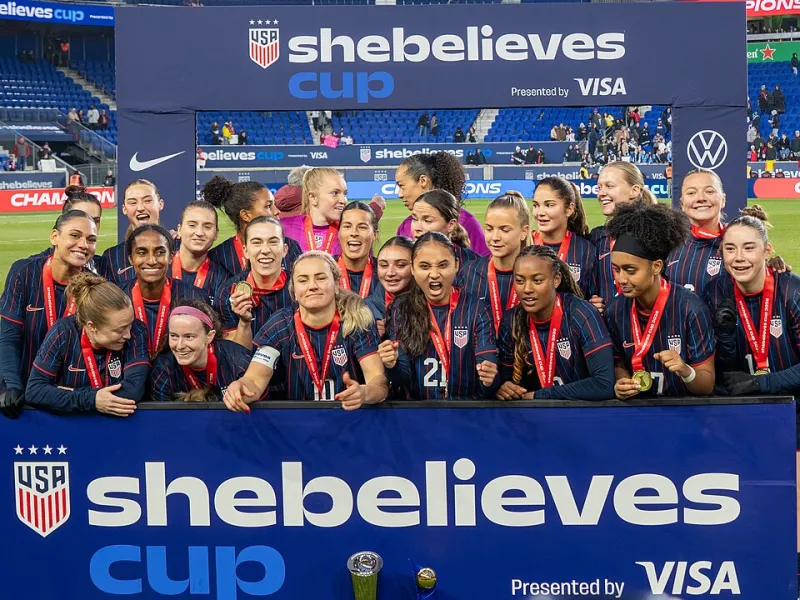
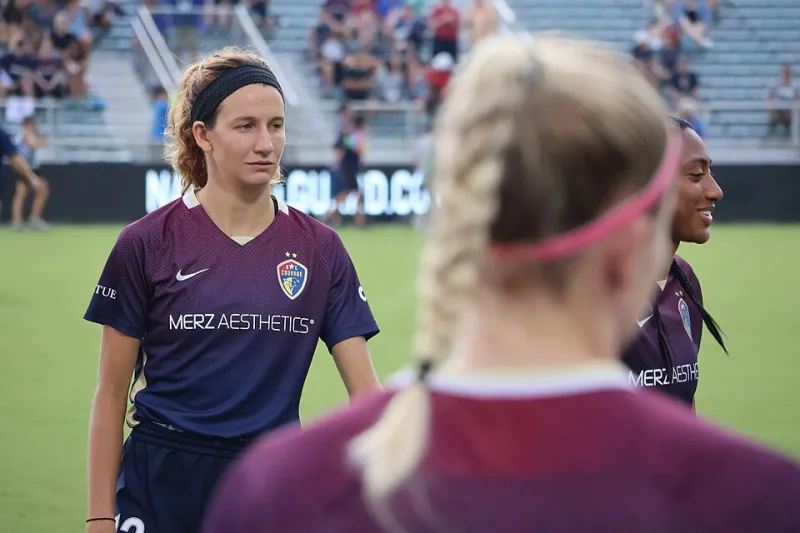
Photo: Bryan Berlin, CC BY-SA 4.0, via Wikimedia Commons
Picture two scenarios.
In the first, a 23-year-old American midfielder just had a breakout tournament for the USMNT. Within weeks, his agent is fielding calls from Bundesliga clubs. MLS is barely in the conversation. If it comes up at all, it's as a fallback — or a punchline.
In the second, a 24-year-old American forward just lifted a trophy with the USWNT. She's fielding partnership offers from major brands, signing a contract extension with her NWSL club, and talking in interviews about helping grow the league she plays in. Europe isn't the goal. This is the goal.
Same country. Same federation. Completely different relationship with domestic soccer.
It's one of the more fascinating cultural splits in American sports right now — and it says a lot about where women's soccer is headed, and where men's soccer still needs to go.
The Men's League Problem Nobody Wants to Admit
Let's start with the uncomfortable truth: MLS has a perception problem among the very players it should be proudest of.
For a generation of USMNT talent, the league represents either the beginning of the journey (before you're good enough to go abroad) or the end of it (when European clubs stop calling). The middle — the prime years, the peak competitive windows — almost never happens in MLS if a player has any choice in the matter.
Christian Pulisic never seriously considered staying stateside. Weston McKennie left early and never looked back. Gio Reyna developed at Borussia Dortmund's academy, not an MLS academy. Tyler Adams built his reputation in Leipzig and Leeds. The message these career arcs send to the next generation of American boys playing soccer is loud and consistent: MLS is not where you want to be if you want to be taken seriously.
And here's the thing — they're not entirely wrong. If you're a 21-year-old American midfielder with genuine top-level potential, playing in the Eredivisie or the Championship genuinely will develop you faster than MLS. The competition level, the tactical density, the physical demands — Europe still has the edge. That's just honest.
But it creates a self-fulfilling prophecy. The best American men leave. The league gets less competitive. The best American men have even less reason to stay. Rinse, repeat.
So Why Are the Women Doing the Opposite?
The USWNT's relationship with domestic soccer is almost the mirror image — and it didn't happen by accident.
For years, the best American women actually did go abroad. Alex Morgan had her Lyon chapter. Megan Rapinoe played in Sweden. The NWSL, when it launched in 2013, was scrappy and underfunded and didn't always feel like the right home for world-class talent.
But something shifted. The league got serious investment. Expansion clubs started arriving with real money and real ambitions — Angel City FC brought Hollywood ownership and a cultural moment. Kansas City Current built a soccer-specific stadium that became a symbol of the league's growing ambitions. Viewership numbers started climbing in ways that made brands pay attention.
And crucially, the top USWNT players started choosing to stay — not because they had to, but because the NWSL started offering something genuinely valuable: a platform, not just a paycheck.
"I want to be part of building something," Trinity Rodman said in a widely circulated interview last year. That sentiment captures something real. USWNT stars increasingly see the NWSL as a place where they can shape the sport's culture, build their brands, and leave a legacy that goes beyond trophies.
That's a fundamentally different relationship with a league than what most USMNT players have with MLS.
The Brand Economy Is Real
Let's talk money — not just salaries, but the full economic picture.
In women's soccer, the United States is the market. The NWSL has a national TV deal, a growing digital footprint, and passionate fanbases in cities that are actively competing to out-support each other. When a USWNT star plays in the NWSL, she's playing in front of her biggest potential audience, in her home market, with maximum brand visibility.
For sponsorship deals, for social media growth, for the kind of cultural relevance that translates into generational wealth — staying home actually makes financial sense for the top USWNT players in a way that it simply doesn't for their male counterparts.
A USMNT star who plays in MLS is, in the eyes of global soccer culture, playing in a lesser league. That perception affects his market value, his jersey sales in Europe, his credibility among international peers. It's unfair, maybe — but it's real.
A USWNT star who plays in the NWSL is playing in the most culturally relevant women's league in the world's biggest sports market. That's not a consolation prize. That's a strategic advantage.
What MLS Can Actually Learn Here
The NWSL's rise offers a genuine blueprint — not for copying wholesale, but for understanding what makes a domestic league worth staying in.
The key ingredients seem to be: genuine investment that creates visible quality improvement, a cultural identity that feels distinct and exciting rather than derivative, and stars who buy into the league's growth story rather than treating it as a pitstop.
MLS has made real progress on the first point. The Messi effect at Inter Miami proved the league can generate genuine global buzz when the right pieces align. Stadium quality has improved dramatically. The product on the field is better than it was five years ago.
But the cultural identity piece? That's harder. MLS still sometimes feels like it's trying to be a slightly cheaper version of European soccer rather than something uniquely American. The NWSL, by contrast, has leaned into its American-ness — the passionate supporter culture, the social activism, the celebrity ownership, the storytelling around women athletes as full human beings rather than just athletes.
That's a vibe. And vibes, it turns out, matter enormously in 2025.
The Long Game
Here's what I keep coming back to: the USWNT's relationship with the NWSL is creating a virtuous cycle that MLS hasn't cracked yet.
When stars stay, the league gets better. When the league gets better, more stars want to stay. When more stars stay, young players grow up watching their heroes in domestic stadiums rather than on European TV broadcasts at weird hours. That changes the culture. That changes the aspiration.
The USMNT pipeline isn't going to flip overnight. European development academies are too good, and the gap in competitive quality is real enough that discouraging talented young men from pursuing those opportunities would be genuinely bad for the national team.
But MLS should be watching what the NWSL is building with something between admiration and urgency. Because the women figured out something the men's league hasn't: the goal isn't to convince players to stay out of obligation. It's to build something so compelling that leaving feels like the strange choice.
Right now, in American soccer, only one league has managed that. And it's not the one with the bigger budget.