Your MLS Club Is Losing You to the Premier League — Here's How It Could Win You Back
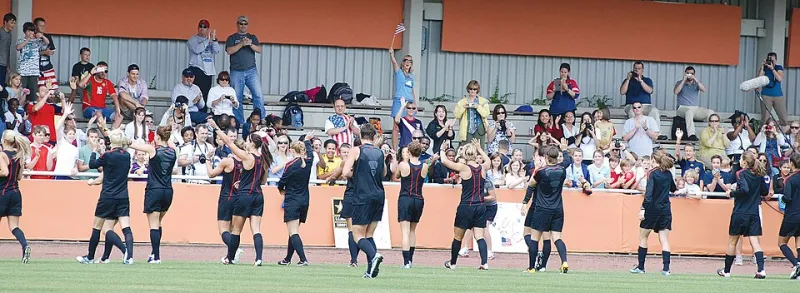
Photo: Chris Yunker, CC BY 2.0, via Wikimedia Commons
Let me paint you a picture. It's a Saturday morning in October. You roll out of bed, grab a coffee, flip on Peacock, and settle in for a 7:30 AM kickoff between Tottenham and Chelsea. Two hours later, you're posting about it on Reddit, replying to tweets from fans in London, and planning to catch the highlights reel before the afternoon slate of games.
Your local MLS club plays that same afternoon. Do you go?
If you're being honest with yourself — and a lot of American soccer fans are having this exact internal conversation right now — the answer is increasingly no. And that's a problem that MLS teams really need to start taking seriously, because the erosion of local fan loyalty isn't some abstract trend. It's showing up in attendance numbers, in TV ratings, and in the vibe at stadiums that used to feel electric and now feel... fine.
The Streaming Revolution Changed Everything
It's impossible to talk about this shift without acknowledging how radically the media landscape has changed. Ten years ago, catching a Premier League game required either a cable package, a sports bar, or some creative internet searching. Now, between Peacock, Paramount+, ESPN+, and Apple TV, you can watch elite European soccer from your phone, your tablet, your smart fridge — whatever.
And the production quality is staggering. You're watching 80,000-person stadiums with roaring atmospheres, commentary from people who've spent decades studying the game, and tactical coverage that treats viewers like adults. Then you switch to a midweek MLS match on Apple TV and the contrast — not always, but sometimes — is hard to ignore.
Streaming didn't create American fans' love of European soccer. That love existed long before. But streaming removed the last remaining friction point. You no longer have to work to watch Manchester City. It's just... there. And when something is just there, it becomes habit. Habits are hard to break.
The Emotional Disconnect Is the Real Issue
Here's what I think gets missed in most conversations about this topic: it's not really about quality of play. Well, not entirely. It's about emotional investment.
Supporting a soccer club — a real one, the kind that gets under your skin — is an emotional experience. You care because other people around you care. You care because the club has history, because it represents something about where you live or who you are. That connection doesn't happen automatically. It has to be built.
And honestly? A lot of MLS clubs haven't done a great job building it.
When a fan in Boston can spend a decade watching Liverpool legends, absorbing the history of Anfield, following transfers and controversies and trophy runs — and then be asked to emotionally invest in a New England Revolution squad that's had modest success and limited cultural footprint — the math just doesn't work in MLS's favor. The emotional bank account that Liverpool has built over a century can't be replicated overnight.
But here's the thing: it doesn't need to be replicated. It needs to be replaced with something different and genuinely compelling.
What MLS Clubs Could Actually Do
I'm not here just to complain. That's the easy part. The harder — and more interesting — question is what MLS clubs could actually do to win back the fans who've drifted toward European soccer. A few ideas worth taking seriously:
Go hyperlocal, and mean it. The clubs that have built the strongest supporter cultures in MLS — think Portland Timbers, Atlanta United, LAFC — did it by becoming genuinely woven into the fabric of their cities. Not through generic community outreach events, but through real relationships with local neighborhoods, local musicians, local artists. The Timbers Army didn't happen because the front office mandated it. It happened because the club created space for it. More clubs need to do this intentionally.
Stop chasing the wrong kind of star power. Bringing in a 35-year-old European legend for a farewell tour generates headlines for three weeks and then fades. What actually builds long-term loyalty is developing and showcasing young American talent — players fans can grow up watching, players who feel like they belong to the city. When a kid from the local academy breaks into the first team, that's a story. That's something to care about.
Make the in-stadium experience genuinely irreplaceable. You cannot replicate a great live atmosphere on a couch. MLS clubs should be investing heavily in the matchday experience — not just the soccer, but the whole event. Pre-game programming, affordable food options (seriously, $17 beers are not helping), interactive fan zones, halftime entertainment that doesn't feel like a middle school talent show. Make attending the game something people want to do on its own merits.
Be honest about the product. Fans can tell when they're being sold something. If the team is in a rebuilding year, say so. Give fans a reason to invest in the journey, not just the destination. Transparency builds trust, and trust builds loyalty.
The Clock Is Ticking
This isn't a crisis yet. MLS attendance figures are still solid in most markets, and the league's overall trajectory is genuinely positive. But the window to deepen local roots before European soccer fully saturates the American market is closing. The next generation of American soccer fans is growing up with unlimited access to the best leagues in the world. If MLS doesn't give them a reason to care about what's happening in their own backyard, they simply won't.
The Premier League isn't going anywhere. Neither is La Liga or the Bundesliga. American fans are going to keep watching, and that's fine — it's actually great for the sport. But there's room for MLS to carve out its own emotional territory, to be the league that feels personal and local and real in a way that no European competition ever can.
The clubs that figure that out sooner rather than later are going to be in a very good position. The ones that don't might find themselves playing to half-empty stadiums while their own fans are home watching a 7:30 AM kickoff from London.