America Has Fallen for the Premier League — But Is That Actually Good News for US Soccer?
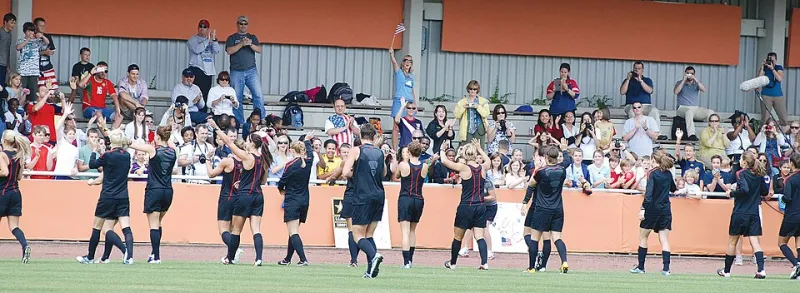
Photo: Brittany Carlson (IMCOM), Public domain, via Wikimedia Commons
Something shifted. It's hard to pinpoint exactly when, but somewhere between NBC Sports acquiring broadcast rights in 2013 and the current streaming wars that have made every Premier League match available on your phone at 7:30 on a Saturday morning, American soccer culture changed fundamentally.
Walk into any sports bar in Chicago, Atlanta, or Portland on a weekend morning and you'll find packed rooms of fans in Arsenal, Liverpool, and Manchester City jerseys — people who know their club's transfer history, their youth academy prospects, and the tactical nuances of a high press versus a mid-block. The Premier League has built a real, passionate fanbase in America, and it's not going anywhere.
But here at BongdaNet Today, we're asking the question that gets glossed over in all the celebration: Is this good for American soccer? The answer is messier than you might think.
The Numbers Don't Lie — Americans Are Obsessed
Let's start with the reality. Premier League viewership in the US has grown dramatically over the past decade. NBC's coverage turned English soccer into a legitimate American television event, complete with studio shows, punditry, and the kind of production value that made casual fans take the sport seriously. Peacock streaming numbers for top fixtures routinely exceed those of MLS playoff matches.
Social media has amplified this further. American fans aren't just watching — they're creating content, running fan accounts, and engaging with English clubs on a level that those clubs have actively cultivated. Arsenal has a marketing office in the US. Liverpool tours here regularly. Manchester City's ownership group also owns the New York City FC, blurring the lines between English and American soccer ecosystems.
The cultural penetration is real. Soccer conversations at American workplaces and schools are increasingly as likely to be about the Premier League title race as the USMNT's latest friendly.
The Case For: European Fandom Raises the Floor
Here's the optimistic read, and it's genuinely compelling. A generation of American kids growing up watching Bukayo Saka's movement, Erling Haaland's finishing, and Mohamed Salah's consistency are developing a soccer literacy that simply didn't exist for previous generations of US fans.
When you understand what elite soccer looks like — the spacing, the pressing triggers, the positional play — you start to demand it at every level. MLS has benefited from this. The average American soccer fan is more sophisticated than they were ten years ago, and that sophistication creates pressure on domestic clubs to improve their product.
Youth development has also been influenced. Coaches at American academies will tell you that kids today arrive with a deeper tactical vocabulary because they've been watching the best players in the world every weekend. That knowledge base accelerates development in ways that are hard to quantify but very real.
And the USMNT? Players like Christian Pulisic, Weston McKennie, and Tyler Adams didn't develop in a vacuum. They grew up in an American soccer culture that valued and analyzed European football, and they went on to play in it. The pipeline from American soccer fan to European professional has never been more active.
The Case Against: Are We Building Someone Else's House?
Now for the uncomfortable part. Every dollar spent on a Premier League jersey is a dollar not spent on an MLS kit. Every emotional investment in Arsenal's title challenge is energy not directed toward your local club. And at a structural level, this matters.
MLS needs passionate, local fanbases to grow into the kind of league that can genuinely compete for global attention. The league has made enormous strides — expansion clubs, purpose-built stadiums, improved broadcast deals — but attendance and viewership still lag behind what the league needs to be financially sustainable at the highest level without relying on marquee signings to generate interest.
There's also a talent drain argument worth taking seriously. The best American soccer players overwhelmingly want to play in Europe — and who can blame them, given the money and exposure? But this means MLS consistently loses its most compelling domestic storylines to foreign leagues. Fans follow players, and when the best American players are in England, Germany, or Spain, the gravitational pull of those leagues intensifies.
Critics of the current dynamic argue that American soccer fans have essentially become a revenue stream for foreign clubs without building the domestic infrastructure that would make the USMNT a genuine world power. It's a pointed critique, and it deserves an honest response.
The 2026 Moment Changes Everything — Or Does It?
The United States, Canada, and Mexico are hosting the 2026 World Cup, and that tournament represents the biggest opportunity American soccer has ever had to convert casual observers into committed fans. The hope — and it's a reasonable one — is that hosting the world's biggest sporting event will create a lasting emotional connection between American audiences and the domestic game.
But here's the thing: Premier League fandom might actually help that conversion. Fans who understand soccer deeply, who've been watching top-level football for years, are better positioned to appreciate what a World Cup actually means. They're more likely to attend matches, more likely to engage with the USMNT's journey, and more likely to stay invested after the tournament ends.
The question is whether that investment flows back into MLS and domestic soccer infrastructure, or whether it simply deepens the attachment to European clubs that already dominate the American soccer imagination.
Where Do We Actually Land?
Honestly? Both things can be true. Premier League fandom has made American soccer culture richer, more knowledgeable, and more globally connected. It has also created a competitive landscape for attention that MLS and domestic soccer struggle to win.
The path forward isn't to choose between loving the Premier League and supporting American soccer — that's a false choice, and most fans intuitively reject it. The real work is building MLS into a product compelling enough to earn its place alongside European football in the American sports diet, not instead of it.
That means better youth development, smarter investment in domestic talent, and a USMNT that gives fans genuine reasons to believe. The Premier League's hold on American imagination isn't the problem. The problem is if American soccer uses that fandom as an excuse rather than a blueprint.
We're watching. And at BongdaNet Today, we'll keep asking the questions that matter — because the beautiful game deserves nothing less.