When the Lights Get Brightest, MLS's Top Teams Keep Blinking

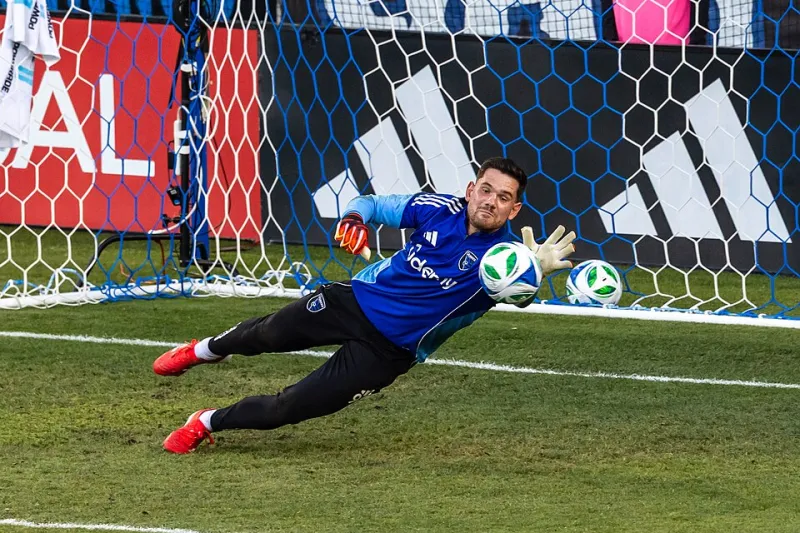
Photo: Major League Soccer, Public domain, via Wikimedia Commons
Every fall, it happens. Some team spends seven or eight months looking absolutely unbeatable — racking up points, dominating possession stats, making highlight reels on a weekly basis — and then, right when the playoffs arrive, they go stone cold. A first-round exit here, a penalty shootout collapse there. Fans refresh their timelines in disbelief. The same question gets asked every single year: what happened?
This isn't just bad luck. There's a pattern buried in MLS playoff history that's uncomfortable to talk about but impossible to ignore. The league's best regular season teams have a genuinely alarming track record of flaming out early in the postseason. And figuring out why that keeps happening might be the most important conversation American soccer isn't having loudly enough.
The Numbers Don't Lie — But They Do Sting
Look back over the last decade of MLS Cup playoffs and you'll find a graveyard of Supporters' Shield contenders and Presidents' Trophy hopefuls who never made it to December. In European leagues, finishing at the top of the table is a near-guarantee of deep cup runs and continental relevance. In MLS, regular season form feels almost decorative by comparison.
The structure of the competition plays a huge role in this. MLS uses a single-elimination format for early rounds, which is brutal for any team carrying even minor momentum swings. In Europe's Champions League, two-legged ties give dominant clubs room to absorb a bad night and recover. In MLS, one rough 90 minutes and you're watching from your couch. For a team that's been running on fumes by late October, that margin for error is basically nonexistent.
Statistically, the gap between regular season performance metrics — expected goals, defensive compactness, pressing intensity — and playoff output is consistently wider in MLS than in comparable professional leagues. That's not just a vibes observation. Analysts who track these numbers have been waving red flags for years.
The Calendar Is Quietly Breaking Your Favorite Team
Here's something MLS doesn't advertise loudly: the American sports calendar is genuinely punishing for soccer players. The league runs from late February through October, often overlapping with international windows that yank key players away for weeks at a time. Add in the travel demands of a league that spans from Seattle to Miami, the physical toll of playing on turf fields that wreak havoc on joints, and the lack of a traditional winter break, and you've got a roster that's quietly running on empty by the time October arrives.
European clubs have the luxury of scheduling breaks, rotating squads through cup competitions to manage minutes, and operating in a system where the physical calendar has been refined over more than a century. MLS is still figuring that out. Head coaches frequently admit — sometimes off the record, sometimes right into a microphone — that managing fatigue through the back half of the season is one of their biggest challenges.
When a team's starting center back is playing on a nagging hamstring, or the creative midfielder who's been carrying the offense hasn't had a genuine rest week since July, it shows up in playoff football. Decision-making slows down. Pressing intensity drops. That half-second of hesitation that didn't matter in a regular season game against a mid-table opponent suddenly turns into a conceded goal against a team that's been quietly preparing for exactly this moment.
Tactics That Win Seasons Aren't Always Tactics That Win Series
There's also a tactical wrinkle that doesn't get nearly enough attention. Regular season success in MLS often rewards teams that play a specific, well-drilled system consistently — high press, vertical passing, aggressive fullbacks. Opponents have 34 games to figure out how to deal with it. Some can't. But playoff opponents? They've had months of film study and a coaching staff laser-focused on one specific problem: how do we stop this team's system?
In a single-elimination or short-series format, tactical adjustments hit differently. A team that's been scoring three goals a game all season can suddenly find itself completely nullified by a compact 4-4-2 and a goalkeeper who's locked in. The regular season rewards consistency. The playoffs reward adaptability. And those aren't always the same thing.
Look at how teams like Sporting KC or the Seattle Sounders — both historically strong regular season sides — have had wildly inconsistent playoff runs despite stacking up points year after year. Meanwhile, teams that scrape into the postseason sometimes ride momentum and tactical flexibility all the way to MLS Cup. It's maddening, but it makes sense when you think about it.
Does MLS Need a Postseason Rethink?
Some voices in the soccer community have started pushing for structural changes — a longer playoff format, two-legged ties, or even a complete reimagining of how postseason seeding works. Others argue that the single-elimination chaos is actually good for the league, creating drama and keeping more fanbases engaged longer into the fall.
But from a competitive standpoint, if MLS wants its best teams to actually look like its best teams when it matters most, something needs to shift. Whether that's smarter squad rotation during the regular season, more sophisticated fatigue management protocols, or a format change that gives top sides a genuine advantage — the current system is producing results that don't reflect the quality on the field for most of the year.
Clubs that are serious about building sustainable success — not just regular season dominance — are already investing in sports science staff, GPS tracking, and load management strategies borrowed from other American sports. It's a start. But until the league itself creates a structure that rewards sustained excellence rather than hot streaks at the right moment, we'll probably be having this same conversation next November.
And the year after that. And the year after that.