The Unsung Rotation: How MLS Bench Players Got Good — And Why Nobody Noticed
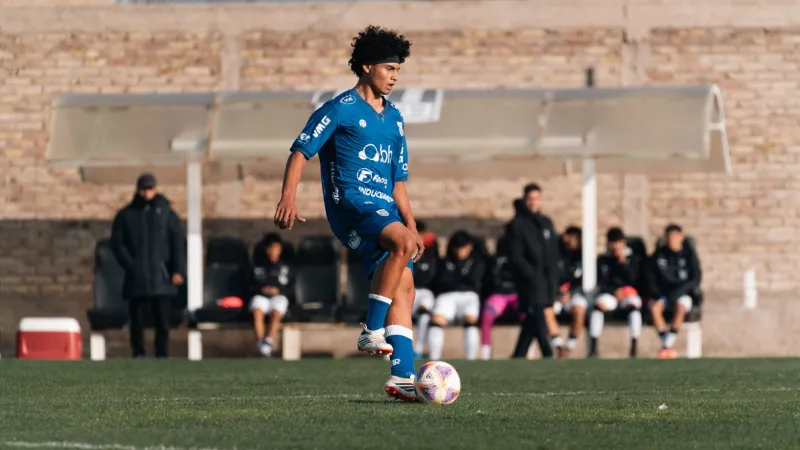
There's a moment that happens in nearly every MLS broadcast. The camera pans to the bench, a name gets called, and the commentator fills the dead air with something vague — "a solid option off the bench" or "a player who gives them some energy." Then the conversation moves on. No deep dive, no tactical context, no real acknowledgment that the guy jogging onto the field might actually be pretty good at soccer.
Here's the thing, though: he probably is. And that's the quiet story MLS hasn't fully told yet.
Depth Isn't Glamorous, But It's Real
Cast your mind back to the early 2020s. MLS rosters were famously thin outside the Designated Player spots. Clubs would pour resources into one or two marquee signings, then fill out the rest of the squad with aging veterans and raw academy kids who weren't quite ready. The gap between a team's starting eleven and its bench was, in a lot of cases, enormous.
Five years later, that gap has narrowed significantly — and it's not an accident. Front offices have gotten smarter. The league's expansion wave brought more competition for roster spots. Homegrown pipelines have matured. And the influx of players from lower European leagues, South America, and the Caribbean has genuinely raised the floor on what a "depth signing" looks like in MLS.
Coaches who've been around the league for a while will tell you off the record that managing a 25-man roster now requires actual tactical thinking in a way it didn't used to. That's a real shift. It just doesn't make for exciting content, so nobody really talks about it.
Injuries and Fixture Pileups Are Doing the Work Journalists Won't
If there's one thing that's forced MLS fans to pay attention to backup players, it's the brutal reality of a packed schedule. Between league games, Leagues Cup, the CONCACAF Champions Cup, and U.S. Open Cup commitments, the clubs that go deep into multiple competitions aren't just leaning on their starters — they physically can't.
And what happens when the rotation kicks in? Sometimes, surprisingly, not much changes on the scoreboard.
That's not a coincidence. When a team's seventh or eighth midfielder steps into a starting role and the performance level holds, it tells you something real about that player's quality. It also tells you something about how the coaching staff has prepared the entire group, not just the names on the fantasy soccer apps.
The injury narrative is particularly telling. Every season, some MLS club loses a key player for six to eight weeks and the obituaries get written immediately. Then a backup steps up, puts together a three or four game run that's genuinely impressive, and gets maybe one feature article before the starter returns and everything resets. The backup goes back to the bench. The story disappears. The cycle repeats.
The Players Who Could Start Somewhere Else
Here's a thought experiment worth sitting with: how many players currently coming off MLS benches would be legitimate starters in the same league if they were on a different roster?
The honest answer is a lot. More than most people realize.
Take wide midfielders and attacking mids in particular. Several clubs have genuine quality in those positions sitting behind DPs who, frankly, aren't that much better. The difference between the starter and the backup sometimes comes down to salary structure, contract length, or a coach's personal preference rather than actual on-field merit. Those players exist on rosters across the league — technically sound, tactically aware, physically ready — and they're collecting splinters because of how the financial pecking order works.
Same story with central defenders. MLS has quietly accumulated a group of center backs in backup roles who would command starting spots at plenty of clubs. They're not flashy. They don't score goals. Defenders rarely trend on social media. But they're competent, experienced, and underused.
American Soccer Culture Has a Star Problem
Let's be honest about why this conversation is even necessary: American sports culture is built around stars. Always has been. The NFL has its QBs, the NBA has its superstars, and MLS has its Designated Players. The whole marketing apparatus of the league runs on selling the headline names, not the supporting cast.
That's understandable from a business perspective. But it creates a real blind spot when it comes to evaluating what actually makes a team competitive over a full season.
The clubs that consistently make deep playoff runs in MLS aren't just the ones with the best DPs — they're the ones with the most functional depth. They're the rosters where the drop-off from the starting eleven to the first two or three subs is manageable rather than catastrophic. That's a competitive advantage that shows up in results but almost never shows up in the pre-season hype cycle.
Fan discourse reflects this imbalance. Go on any MLS subreddit or Twitter thread after a game and count how many times backup players get meaningful analysis versus how many times the conversation orbits around the designated player who had a quiet night. The ratio is pretty stark.
What Smart Coaches Are Actually Doing
The coaches who've figured this out are building game plans that account for the bench from the jump — not as an afterthought, but as a genuine tactical weapon.
That means having a clear identity for how the team plays so that any player stepping into the lineup understands their role without needing extensive adjustment time. It means training rotations honestly, giving backup players real reps in tactical scenarios rather than just extra conditioning work. And it means trusting those players in meaningful moments rather than waiting until a game is already lost to make changes.
The results, when this philosophy is applied consistently, are noticeable. Teams that rotate effectively don't just survive fixture congestion — they sometimes thrive in it. Fresher legs, tactical unpredictability, opponents who've done their scouting on the starting eleven suddenly facing different movement patterns. It's not a magic formula, but it's real.
Give the Bench Its Flowers
None of this is to say MLS has solved its depth problem entirely. There are still clubs out there running paper-thin rosters where the drop-off from starter to sub is genuinely alarming. The league's economic structure still incentivizes spending big on a few names rather than spreading investment across a balanced squad.
But the trajectory is moving in the right direction, and the players driving that change deserve more than a passing mention when a camera pans to the bench.
Next time your team's number 20 or 21 comes on in the 65th minute and quietly does their job — wins a header, tracks back to defend, keeps possession under pressure — maybe take a second to appreciate what you're watching. It's not the highlight reel. It's the part of the game that actually determines whether your club is still playing in November.
And in MLS right now, that part of the game is better than it's ever been.